


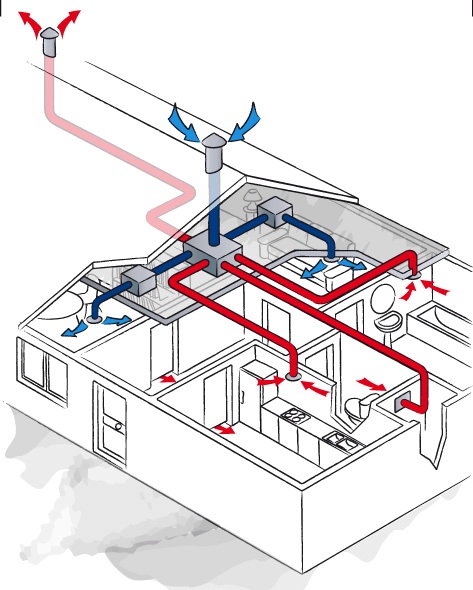
When choosing a ventilation system for your home or apartment, one of the most important questions is:
Should you install a system with heat recovery (HRV)?
Let’s explore the differences between standard ventilation and heat recovery ventilation and whether investing in HRV is worth it.
📊 Comparison Table
| Parameter | Ventilation Without Heat Recovery | Ventilation With Heat Recovery (HRV) |
|---|---|---|
| 💡 Heating Energy Consumption | High | Up to 50–70% savings |
| ❄ Heat Loss in Winter | Significant | Minimal (up to 95% retained) |
| 🌬 Comfort | Drafts, temperature swings | Stable indoor climate |
| 🌡 Temperature Support | No | Yes |
| 💧 Humidity Control | Limited | Effective |
| 🔊 Noise Level | Moderate | Low |
| 💰 Initial Cost | Lower | Higher |
| 📆 Payback Period | None | 1–3 years through energy savings |
| 🏡 Suitable for Homes/Apartments | Partially | Fully |
| ⚙ Maintenance | Simple | Simple (filter replacement) |
🧠 What Is Heat Recovery?
A heat recovery ventilator (HRV) is a system that captures heat from outgoing indoor air and uses it to warm incoming fresh air from outside.
This ensures that your home gets fresh, pre-warmed air in the winter, significantly reducing heating costs.
📈 When Should You Choose HRV?
- You live in a cold climate (like Tashkent in winter)
- You have airtight plastic windows
- You want to reduce heating and cooling bills
- Your home often feels stuffy or humid
- You care about a healthy indoor climate, free from mold and condensation
🛠 When Is Standard Ventilation Enough?
- For non-residential areas (garages, warehouses)
- In regions with a mild year-round climate
- If you have a limited budget and need a short-term solution
✅ Why Install an HRV System from Datevi?
- 🔧 Professional installation
- 🌡 Automatic temperature control
- 📉 Up to 30–40% savings on heating
- 🧼 Fresh air without pollutants or moisture
- 📍 Available across Uzbekistan

